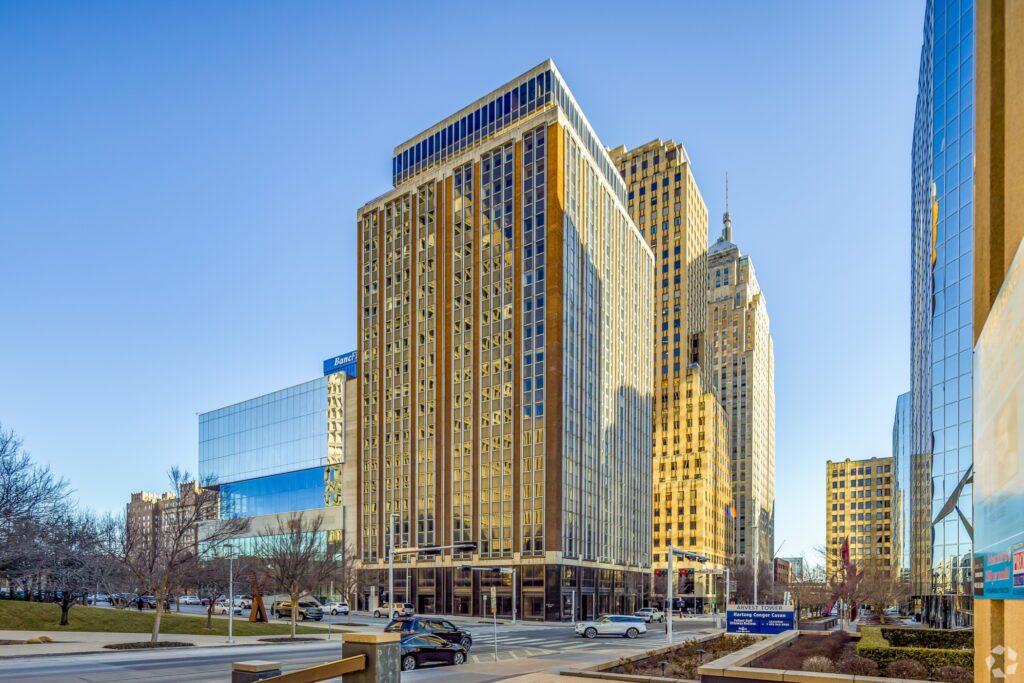
Oklahoma City’s historic Dowell Center office tower to become apartments
admin / September 2026
P.B. Odom III Construction plans roughly 200 units.
As demand for office space continues to lag, another downtown building in Oklahoma City is set to join the growing ranks of residential conversions.
Developer P.B. Odom III and his son, David, of P.B. Odom III Construction, plan to turn the 20-story tower known as the Dowell Center, at 250 N. Robinson Ave. in Oklahoma City into roughly 200 apartments, betting that housing demand and historic tax credits can succeed where efforts to revive the building as office space fell short.
“We’ve been developing for 91 years, which is a long time in a young state, … and the market indicated to us that this was a good move,” P.B. Odom III said. The Oklahoma-based developer said the company plans to reposition the more-than-200,000-square-foot building as a market-rate multifamily development with high-end finishes, fitness amenities and shared resident spaces featuring views of downtown Oklahoma City.
The developer purchased the property earlier this month. He declined to disclose the sale price or the planned unit sizes, saying it was too early in the process.
The effective rent in downtown Oklahoma City is $1,397. The area’s multifamily submarket had a vacancy rate of 8% in the third quarter of 2026, compared with a five-year average of 11.3%.
Project is developer’s first historic endeavor
Odom said the building, which dates to 1927, has been vacant for several years. The endeavor marks the developer’s first downtown project and first historic redevelopment effort.
The plans also reflect a broader trend across the country as property owners seek new uses for aging office buildings amid reduced demand for traditional workspace. “[The] office market is gone in just [about] every central business district,” Odom said, attributing the shift to the pandemic and changes in workplace behavior.
Odom said the economics of new construction in Oklahoma City make adaptive reuse an attractive option, particularly when paired with historic preservation incentives. He said the building is nearly gutted, with much of the mechanical, electrical and plumbing infrastructure already removed. Because the project must meet historic preservation requirements, portions of the property will remain intact.
“We know for certain the exterior facade, which is brick and glass, is going to stay in place,” Odom said, adding that he expects the project to take about 24 months.
For Odom, the fact that the building has stood for nearly a century is part of its appeal.
“We [love] bringing something that was usable and great in its day into another era of functionality that eliminates a hole that’s not being utilized in downtown.”
« Previous Next »
