In Oklahoma, demographics are destiny, and the future is bright
admin / April 2026
Population gains lead to positive real estate fundaments in most major markets
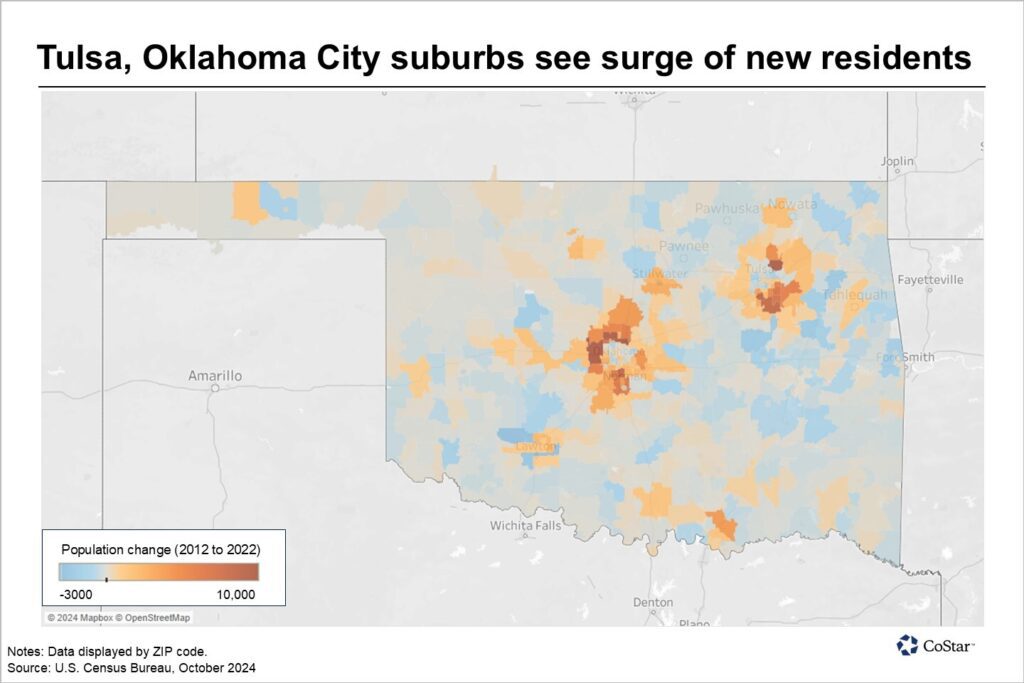
In an era of ever-increasing costs, the great migration of affordability has benefited some parts of the country more than others. Oklahoma is a prime example of this trend.
The last several years have resulted in some of the fastest growth in recent history for this state. According to the Oklahoma Economist, a publication by the Federal Reserve Bank of Kansas City, a significant portion of this gain came from residents from the West Coast and Texas, resulting in a rapidly growing professional base.
While most parts of Oklahoma have enjoyed positive net flows from other parts of the country, the trend has been consolidation around two major areas: Oklahoma City and Tulsa.
The latter is a perfect case study of this trend, with the influx of new, working-age residents shifting the entire distribution of their population. In a region where natural population growth is the primary driver of new residents, one might expect the base of the population pyramid to be greater, as new births are enough to replace deaths and then some. On the other hand, when migration is a more significant driver, the center of the pyramid begins to bloat, especially when these new residents are working age.
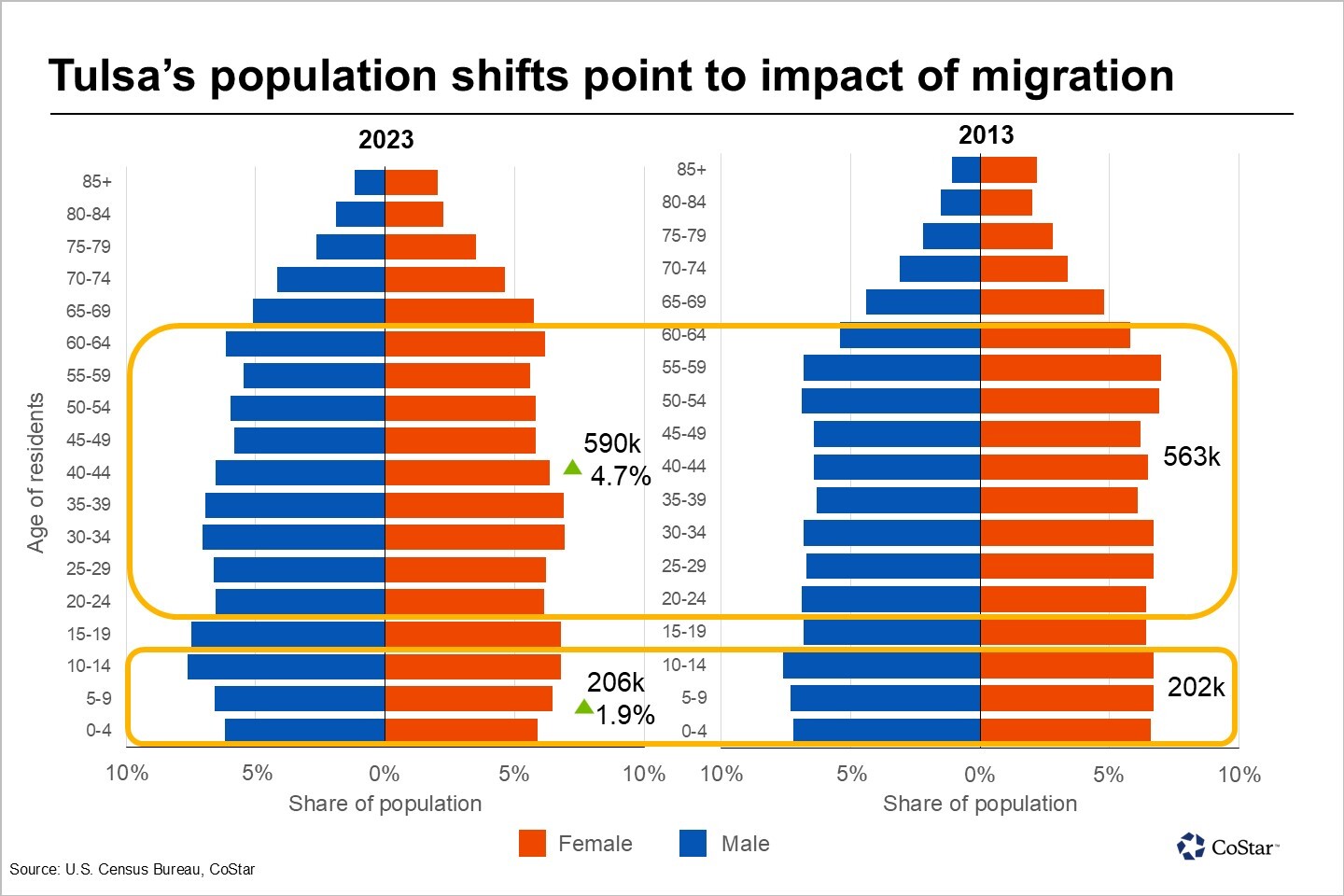
Since 2020, the population of Tulsa has grown by around 29,400 new residents. Migration into this metropolitan area fueled approximately 92% of this total growth — an impact over 13 times greater than the area’s natural growth.
Driving this are programs like Tulsa Remote, which offers incentives for remote workers to relocate to the area. In return, each new Oklahoman is eligible to both receive a $10,000 grant to cover the move and gain access to community support systems highlighted. To date, the program has claimed to have issued about 3,000 grants, accounting for roughly 14% of new residents in the region.
These positive developments help fuel a vibrant commercial real estate economy. Household incomes in Tulsa saw increases of roughly 35.6% between 2013 and 2023, outpacing the rate of inflation and resulting in real wage growth in the aggregate.
This theme has translated to an increasingly tight space market for retail properties. At 3.5%, Tulsa’s availability rate falls below the U.S. average of 4.7%. Furthermore, availability has all but evaporated for trade areas with median incomes of $75,000 or more. This trend traces retail pockets with robust buying power, especially in sections of southern Tulsa and northern suburbs like Owasso.
Multifamily construction in Tulsa has remained relatively constrained compared to other Sun Belt markets, even as population growth has trended higher. Construction levels in Tulsa translated to about 4% at its peak, below the U.S. average of 6%. Even as the market has faced a more subdued supply-demand imbalance compared to Sun Belt peers, stable demand in the neighborhoods of northern and southern Tulsa as well as Broken Arrow have yielded vacancy rates about 200 basis points below the market average.
« Previous Next »
